
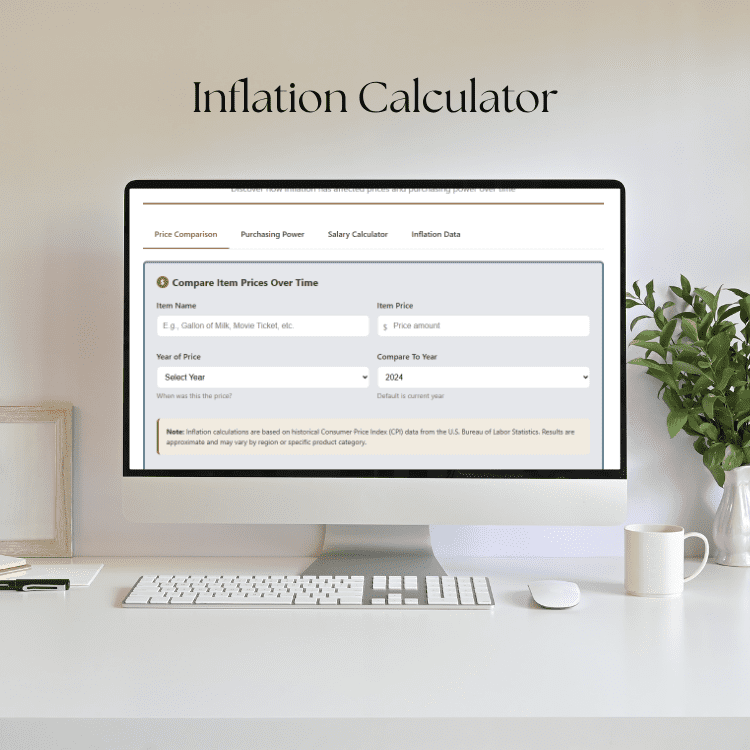
Why Understanding Inflation Is Critical to Your Financial Health
Worried about rising prices eroding your savings? Our Inflation Calculator helps you understand inflation’s impact and plan strategies to protect your financial future.
Inflation is the silent wealth killer that affects every aspect of your financial life. What costs $100 today will cost $134 in 10 years at just 3% annual inflation. Over time, this erodes your purchasing power and can derail retirement plans if not properly accounted for.
Our Inflation Calculator helps you visualize inflation’s impact on your money and provides insights for making inflation-resistant financial decisions.
Powerful Features of the Inflation Calculator
Historical Analysis
- Past Purchasing Power: See what money from previous decades is worth today
- Historical Inflation Rates: Track inflation trends over different time periods
- Real vs. Nominal Value: Understand the difference between face value and actual purchasing power
Future Projections
- Cost Predictions: Estimate future costs of goods and services
- Retirement Planning: Calculate how much you’ll need to maintain purchasing power
- Salary Requirements: Determine future income needs to maintain lifestyle
- Investment Goals: Set return targets that beat inflation
Scenario Planning
- Multiple Inflation Rates: Compare scenarios with different inflation assumptions
- Category-Specific Inflation: Analyze how different goods inflate at different rates
- Regional Variations: Factor in location-specific cost increases
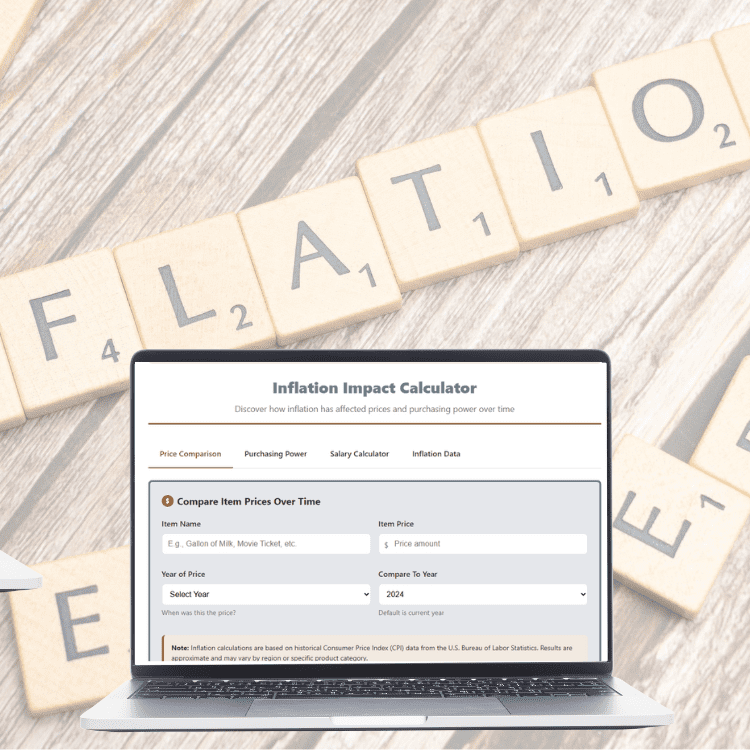
How to Use the Inflation Calculator
Step 1: Choose Your Analysis Type
Select whether you want to analyze historical purchasing power, project future costs, or compare investment returns to inflation rates.
Step 2: Enter Your Values
Input the dollar amount, time period, and inflation rate you want to analyze. Use historical averages or current projections based on your needs.
Step 3: Review the Results
See detailed breakdowns showing how inflation affects your money over time, including year-by-year projections and cumulative effects.
Step 4: Apply the Insights
Use the results to adjust your savings goals, investment strategy, and retirement planning to account for inflation’s impact.
Real-World Benefits of Understanding Inflation
Better Retirement Planning
Understanding inflation helps you set realistic retirement savings goals. What seems like enough money today may fall short if inflation isn’t factored into your planning.
Smarter Investment Decisions
Knowing you need returns above the inflation rate helps you choose investments that actually grow your purchasing power rather than just nominal value.
Improved Salary Negotiations
Use inflation data to negotiate raises that maintain or improve your standard of living rather than accepting increases that don’t keep pace with rising costs.
Strategic Major Purchase Timing
Understanding inflation trends can help you decide whether to make large purchases now or wait, potentially saving thousands on homes, cars, and other major expenses.
How Inflation Affects Different Areas of Your Life
Housing Costs
Housing typically inflates faster than general inflation, making homeownership a potential hedge against inflation while making renting more expensive over time.
Healthcare Expenses
Medical costs often inflate at twice the general rate, making health savings accounts and good insurance coverage even more critical for long-term planning.
Education Costs
College tuition has inflated far above general inflation rates, requiring aggressive saving strategies for families planning for children’s education.
Food and Energy
These necessities can experience volatile price swings, making budgeting and emergency fund planning more important for financial stability.
Strategies to Protect Against Inflation

Invest in Real Assets
Real estate, stocks, and commodities typically maintain or increase value during inflationary periods, protecting your purchasing power better than cash.
Consider Inflation-Protected Securities
Treasury Inflation-Protected Securities (TIPS) and I-Bonds adjust with inflation, providing guaranteed protection against rising prices.
Maintain Reasonable Debt Levels
Fixed-rate debt can actually benefit you during inflation, as you pay back loans with dollars worth less than when you borrowed them.
Increase Your Earning Potential
Invest in skills, education, and career development to ensure your income can grow faster than inflation over time.
Common Inflation Misconceptions
“Inflation Only Affects Rich People”
Inflation actually hurts people with fixed incomes and those who keep money in low-yield savings accounts the most. Higher earners often have assets that appreciate with inflation.
“Cash Is Always Safe”
While cash protects against market volatility, it loses purchasing power to inflation over time. Some inflation protection is necessary for long-term wealth preservation.
“Inflation Is Always Bad”
Moderate inflation (2-3% annually) is considered healthy for economic growth. Deflation can actually be more economically damaging than moderate inflation.
Start Protecting Your Money Today
Inflation never stops, which means your money’s purchasing power is constantly under pressure. The sooner you understand and plan for inflation’s impact, the better positioned you’ll be to maintain and grow your wealth over time.
Don’t let inflation silently erode your financial security. Get the insights you need to make inflation-resistant financial decisions.
Ready to inflation-proof your finances? Use our Inflation Calculator and discover how to protect your money’s purchasing power.
Part of the RootedinCents.com financial planning toolkit. Explore more calculators and investment strategies in our resource library.

