
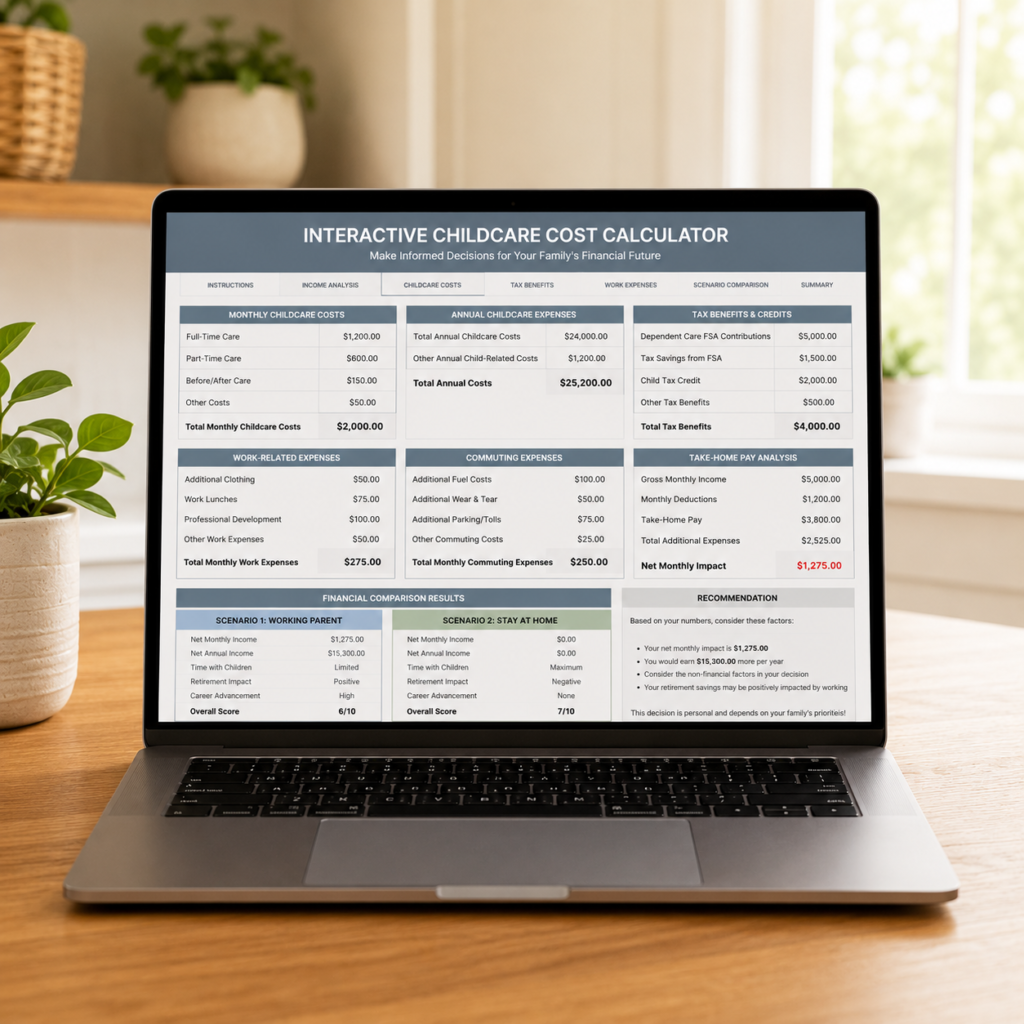
Facing tough decisions about childcare?
Our Childcare Cost Planner and Calculator helps you compare options financially and make informed choices for your family’s future.
Making decisions about work and childcare is one of the most significant financial
and personal choices a family can face. The true cost of childcare goes far beyond
a simple monthly bill, it impacts your take-home pay, your family’s well-being,
and your long-term financial goals. That’s why this workbook was created: to help you see the full picture.
This comprehensive, 30-page workbook is more than just a calculator.
It’s a guided journey through every aspect of the childcare vs. income equation,
designed specifically for families considering a one-income scenario. Inside, you’ll find detailed calculators,
real-life scenario planning, and practical tools to help you break down your income, assess all types of childcare costs,
and factor in work-related expenses. You’ll also explore the tax impact, run break-even analyses, and compare different
work and care scenarios side by side.
Whether you’re weighing the benefits of full-time work, part-time work, or staying at home,
this workbook will help you make an informed, confident decision that fits your family’s
unique needs, financially and beyond.
Why Childcare Planning Is Critical for Family Finances
Childcare represents the largest expense for many families, often costing more than housing or college tuition. The average family spends $10,000-$20,000 annually per child on childcare, making it essential to plan strategically and understand all your options before making decisions that will impact your budget for years.
Our Childcare Cost Calculator helps you analyze different childcare scenarios and their true financial impact, including hidden costs and tax implications that many families overlook.
Comprehensive Features of the Childcare Cost Planner/calculator
Complete Cost Analysis
- Direct Childcare Costs: Daycare, nanny, babysitter, and family care expenses
- Work-Related Expenses: Commuting, professional clothing, meals out, and convenience costs
- Tax Implications: Childcare tax credits, dependent care FSA benefits, and tax bracket changes
- Opportunity Costs: Lost income, career advancement, and benefits from staying home
Scenario Comparisons
- Daycare vs. Stay-at-Home: Complete financial comparison including all costs and benefits
- Different Childcare Types: Compare daycare centers, home daycares, nannies, and relative care
- Part-Time vs. Full-Time: Analyze partial childcare solutions and flexible work arrangements
- Multiple Children: Factor in sibling discounts and scaling costs
Long-Term Planning
- Age-Based Cost Changes: Account for different costs as children age
- Career Impact Analysis: Project long-term earning potential under different scenarios
- Retirement Planning: Consider impact on retirement savings and Social Security benefits
How to Use the Interactive Childcare Cost Calculator
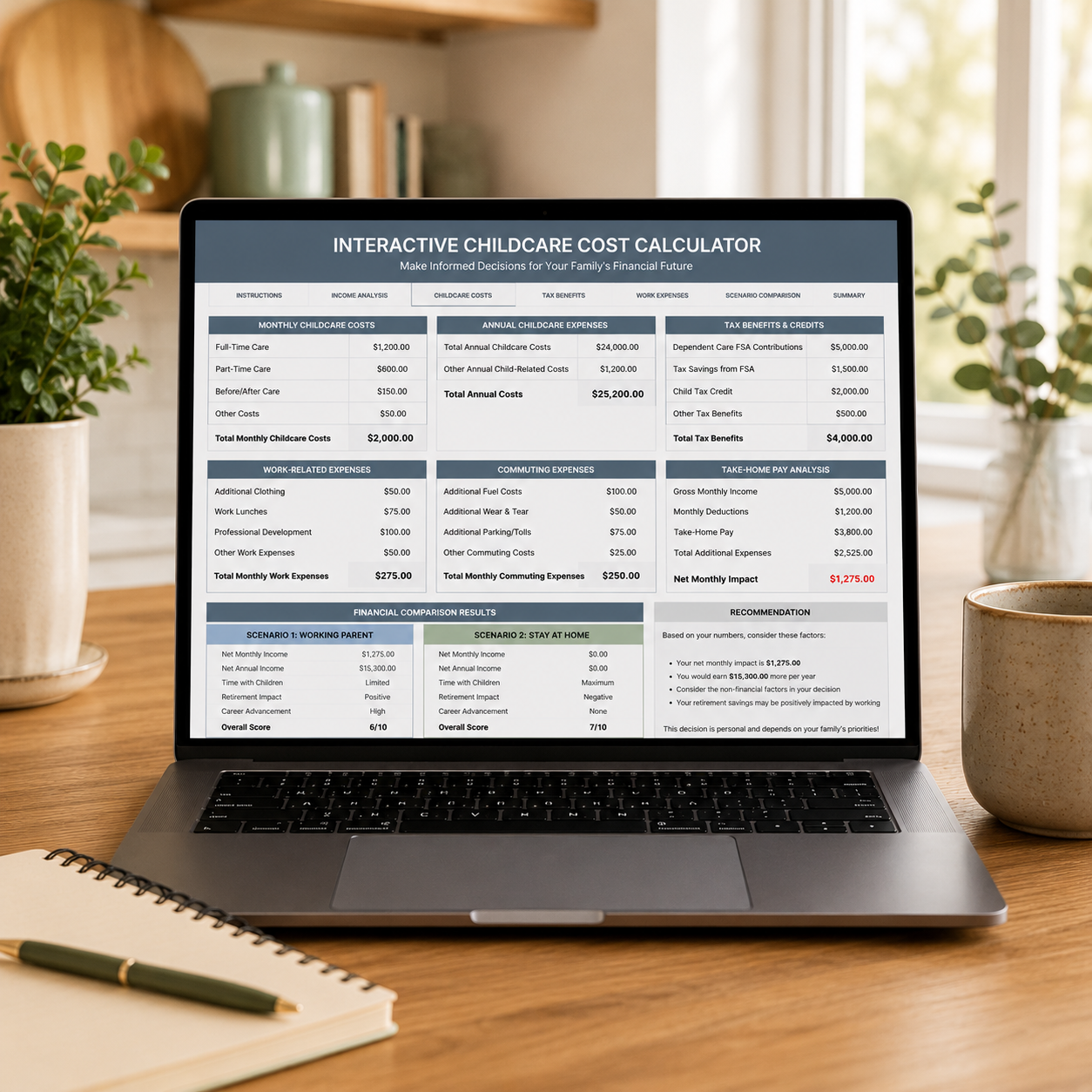
Step 1: Input Your Family Situation
Enter details about your children’s ages, your household income, current work expenses, and available childcare options in your area.
Step 2: Explore Childcare Options
Input costs for different childcare scenarios you’re considering, including any available family support or flexible work arrangements.
Step 3: Factor in All Costs
Include work-related expenses like commuting, professional clothing, and convenience costs that would be eliminated if a parent stays home.
Step 4: Review Complete Analysis
Get detailed financial projections for each scenario, including net cost differences, tax implications, and long-term career impacts.
Benefits of Strategic Childcare Planning
Informed Decision Making
Understanding the true costs of different childcare options helps you make decisions based on facts rather than emotions or assumptions about what you “should” do.
Budget Optimization
Many families discover that staying home or choosing alternative arrangements actually costs less than initially assumed when all factors are considered.
Career Planning
Long-term analysis helps you understand career impacts and plan re-entry strategies if you choose to step away from work temporarily.
Stress Reduction
Having clear financial projections reduces anxiety about childcare decisions and helps you feel confident in your choice.
Hidden Costs of Working While Paying for Childcare
Transportation and Commuting
Gas, car maintenance, parking, or public transportation costs can add $200-$500 monthly for working parents.
Professional Wardrobe and Appearance
Work clothing, dry cleaning, haircuts, and professional appearance maintenance can cost $100-$300 monthly.
Convenience Purchases
Takeout meals, convenience foods, housecleaning services, and time-saving purchases often increase when both parents work.
Backup Childcare
Costs for sick child care, snow day coverage, and backup arrangements can add hundreds annually to childcare expenses.
Maximizing Tax Benefits for Childcare

Child and Dependent Care Tax Credit
Claim up to $3,000 per child (max $6,000 for two or more) in childcare expenses for a credit of 20-35% depending on income.
Dependent Care Flexible Spending Account
Set aside up to $5,000 pre-tax annually for childcare expenses, effectively reducing costs by your tax rate percentage.
Child Tax Credit
Additional $2,000 per child tax credit that phases out at higher income levels but provides substantial savings for eligible families.
State-Specific Benefits
Many states offer additional childcare tax credits or subsidies that can significantly reduce net childcare costs.
Alternative Childcare Solutions to Consider
Family and Relative Care
Grandparents, siblings, or other relatives may provide care at reduced costs, though it’s important to consider reciprocal arrangements and boundaries.
Nanny Shares
Sharing a nanny with another family can provide personalized care at a fraction of individual nanny costs while offering more flexibility than daycare.
Cooperative Childcare
Parent cooperatives where families share childcare duties can dramatically reduce costs while building community connections.
Flexible Work Arrangements
Remote work, flexible hours, or job sharing can reduce childcare needs and costs while maintaining career momentum.
Planning for Different Life Stages
Infant Care Costs
Infant care is typically the most expensive, with costs often 25-50% higher than preschool-age care due to lower child-to-caregiver ratios.
Toddler and Preschool Savings
Costs typically decrease as children age and require less intensive supervision, providing budget relief as children approach school age.
School-Age Considerations
Before and after school care, summer programs, and school holidays create different but significant childcare costs that should be planned for.
Multiple Children Scenarios
Sibling discounts, scaling costs, and the impact of having children at different life stages all affect the financial calculus of childcare decisions.

Making the Right Choice for Your Family
Consider Non-Financial Factors
While finances are important, also consider career satisfaction, child development preferences, family values, and personal fulfillment in your decision.
Plan for Flexibility
Life circumstances change. Choose arrangements that allow for adjustments as your family’s needs and financial situation evolve.
Communicate with Your Partner
Ensure both partners understand the financial implications and are aligned on priorities and expectations for childcare arrangements.
Have a Re-evaluation Plan
Plan to reassess your childcare decisions annually or when major life changes occur to ensure your arrangement still serves your family well.
Start Planning Your Childcare Strategy Today
Childcare decisions have lasting impacts on your family’s finances, career trajectories, and quality of life. Making informed choices based on complete financial analysis helps ensure you choose the arrangement that truly works best for your family’s unique situation.
Don’t make childcare decisions based on incomplete information or assumptions. Get clear financial projections for all your options and make confident choices for your family’s future.
Ready to make informed childcare decisions? Use our Childcare Cost Planner for a complete financial analysis of all your childcare options.


