
Why Thrift Shopping Is More Than Just Saving Money
The average family spends over $1,800 annually on clothing alone, with many items worn only a few times before being discarded. Thrift shopping can reduce these costs by 70-90% while supporting environmental sustainability and often finding higher-quality items than modern fast fashion.
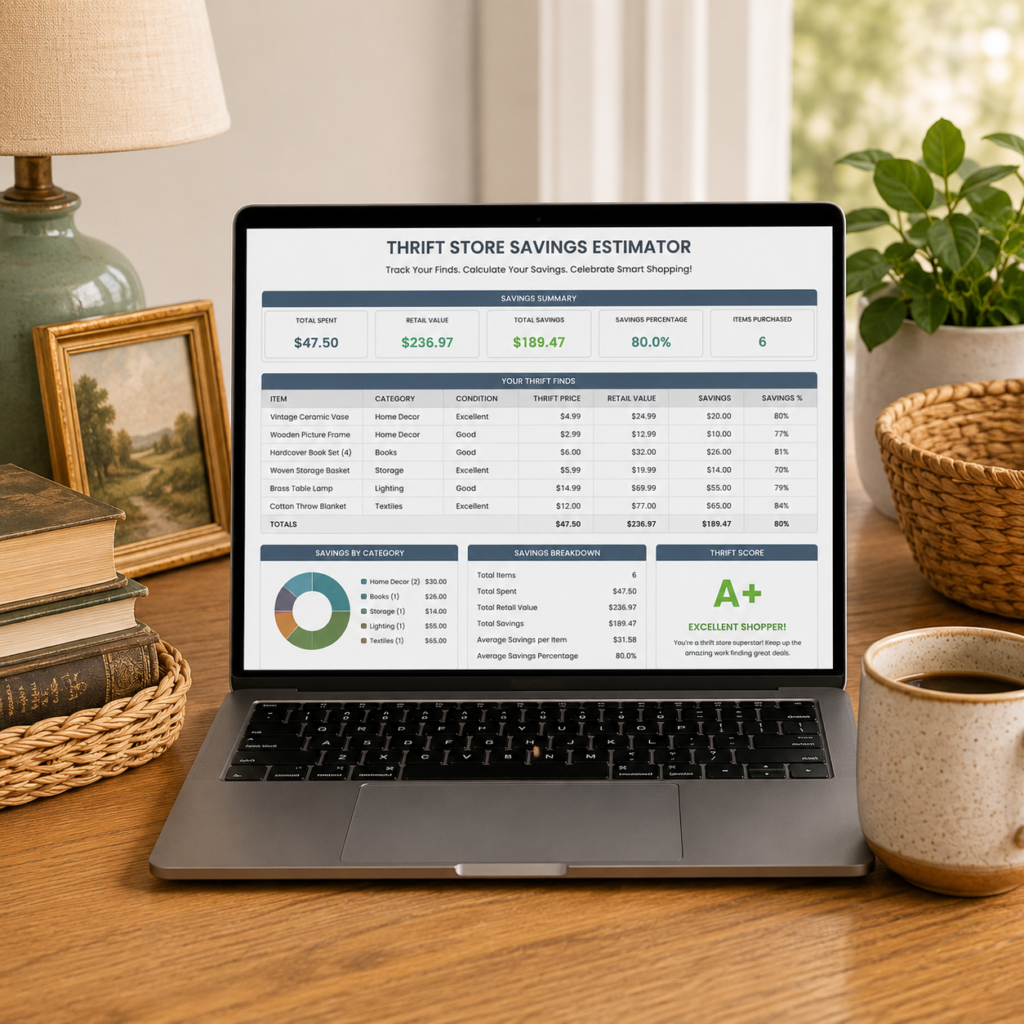
Our Thrift Store Estimator helps you understand the true value of secondhand purchases and develop strategies for maximizing your savings while building a wardrobe and home you love.
Comprehensive Features of the
Thrift Store Estimator
Savings Calculation
- Cost Comparison: Compare thrift prices to new retail prices for similar items
- Quality Assessment: Factor in item condition and expected lifespan
- Brand Value Analysis: Understand which brands offer the best thrift value
- Seasonal Timing: Identify the best times to shop for specific items
Resale Value Estimation
- Flip Potential: Calculate potential profit from reselling thrift finds
- Depreciation Tracking: Understand how different items hold value over time
- Market Demand: Identify items with strong resale markets
- Condition Impact: See how item condition affects resale value
Shopping Strategy Optimization
- Budget Allocation: Determine optimal spending across different item categories
- Store Selection: Compare different thrift stores and pricing strategies
- Timing Optimization: Plan shopping trips for maximum selection and sales
How to Use the Thrift Store Estimator
Step 1: Define Your Shopping Goals
Specify whether you’re shopping for personal use, resale, or specific items like clothing, furniture, or books. Different goals require different evaluation strategies.
Step 2: Input Item Details
Enter information about items you’re considering, including brand, condition, original retail price, and thrift store asking price.
Step 3: Assess Value Factors
Consider factors like item rarity, condition, brand reputation, and current market demand for similar items.
Step 4: Review Recommendations
Get detailed analysis showing whether an item represents good value, potential resale profit, and suggestions for negotiating better prices.
Benefits of Strategic Thrift Shopping
Massive Cost Savings
Regular thrift shoppers often save 70-90% on clothing, home decor, books, and household items compared to buying new, freeing up hundreds or thousands annually for other financial goals.
Environmental Impact
Buying secondhand reduces demand for new production, decreasing environmental impact while extending the useful life of existing items.
Unique Find Opportunities
Thrift stores often carry vintage, discontinued, or unique items unavailable in traditional retail stores, allowing you to develop a distinctive personal style affordably.
Potential Income Source
Knowledgeable thrift shoppers can identify valuable items for resale, turning shopping into a profitable side hustle or hobby.
Best Thrift Store Finds and What to Look For
High-Value Clothing Items
- Designer brands at fraction of retail cost
- Wool coats and jackets that retail for hundreds
- Vintage pieces with timeless appeal
- Quality shoes from premium brands
Home and Furniture Treasures
- Solid wood furniture pieces
- Cast iron cookware and quality kitchen tools
- Art and decorative items
- Books, especially hardcovers and specialty topics
Collectibles and Resale Items
- Vintage electronics in working condition
- Board games and toys from popular franchises
- Jewelry, especially precious metals
- Sports memorabilia and collectibles
Thrift Shopping Strategies That Maximize Value
Know Your Brands
Learn to recognize quality brands across different categories. A $5 cashmere sweater from a premium brand represents incredible value, while a $5 fast-fashion item might not be worth it even secondhand.
Inspect Items Thoroughly
Check for stains, tears, missing buttons, and functionality issues. Factor repair costs into your value calculation, but don’t overlook items with minor fixable flaws.
Shop Regularly but Strategically
Thrift store inventory changes constantly. Regular visits increase your chances of finding great deals, but focus on stores in affluent areas for higher-quality donations.
Time Your Shopping
Shop early in the day for best selection, during sale days for better prices, and seasonally for items like coats in spring or swimwear in fall.
Common Thrift Shopping Mistakes to Avoid
Buying Items Just Because They’re Cheap
A poor-quality item is never a good deal, regardless of price. Focus on items you genuinely need or love rather than impulse purchases.
Ignoring Return Policies
Most thrift stores have strict no-return policies. Be certain about purchases, especially for items like electronics or appliances.
Not Checking for Completeness
Ensure board games have all pieces, electronics include necessary cables, and appliances have all components before purchasing.
Overlooking Sizing and Fit
Thrift stores typically don’t allow returns. For clothing, try items on when possible or know your measurements in different brands.
Building a Thrift Shopping Budget
Set Monthly Limits
Even with great deals, overspending at thrift stores can hurt your budget. Set realistic monthly limits and stick to them.
Prioritize Needs Over Wants
Shop with a list of needed items first, then browse for wants only if budget allows. This prevents accumulating unnecessary items.
Factor in Cleaning and Repair Costs
Budget for dry cleaning, alterations, or minor repairs that might be needed to make thrift finds usable.
Track Your Savings
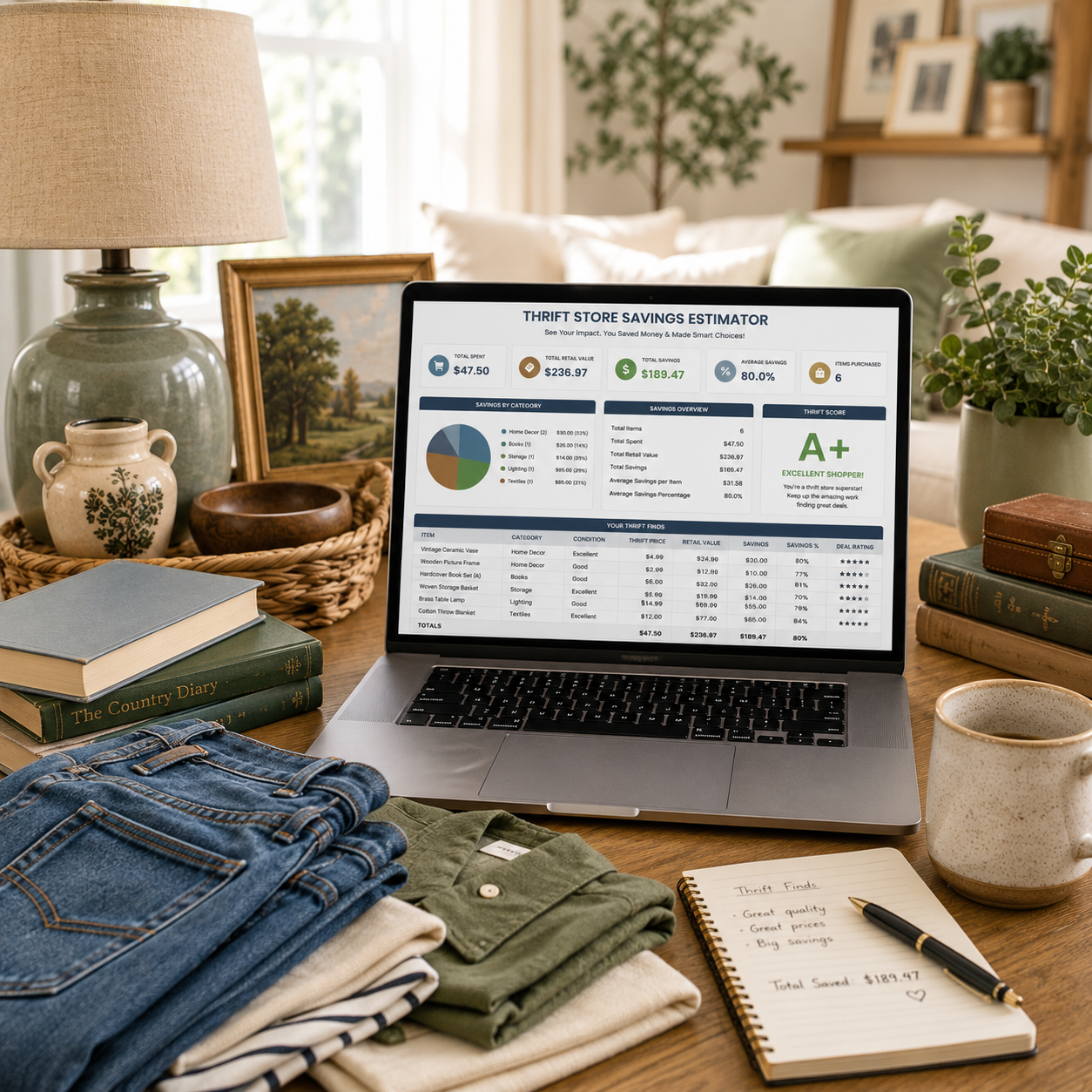
Keep records of retail prices versus thrift prices to quantify your savings and stay motivated about secondhand shopping.
Start Maximizing Your Thrift Store Success
Thrift shopping can dramatically reduce your spending on clothing, home goods, and other necessities while potentially providing income opportunities through resale. The key is shopping strategically rather than randomly browsing.
Transform your approach to secondhand shopping from casual browsing to strategic value hunting. Understand what makes a good deal and develop the skills to spot valuable items others might overlook.
Ready to become a thrift shopping expert? Use our Thrift Store Estimator and start making smarter secondhand purchases today.
Find more money-saving strategies and budgeting tools in our complete resource library @rootedincents.store


